Tuesday, May 1, 2018

Shoujo☆Kageki Revue Starlight
Shoujo☆Kageki Revue Starlight
Idol, Drama
Airing Date:
July 13 2018
Kinema Citrus
(Credit Honey’s Anime when you use our description.)
Weekly Hot Moments in Anime

This week is
Wow! There are so many good anime this season! Is anyone watching Rokuhoudou Yotsuiro Biyori?

What? No. Stop. No Bishounen. Just give me action and ecchi.

You"re right! There are just so many good ones!

But why aren"t we talking about Tokyo Ghoul? W H Y?
Contains Spoilers
Nagareboshi
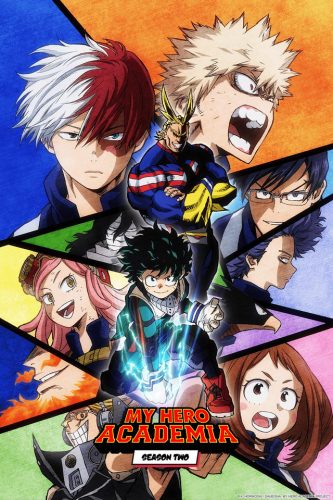
You know that moment when your back is up against the wall and you really gotta pull it out, but you need something to pull it through, this is the time when the imperium silver crystal would come in help. Somehow, Deku made it happen this week without it and he’s amazing for doing so.
So we knew that the villains would be coming last week, and boy did they ever. We even saw blood! So basically this week was a lot of throwing punches and villains everywhere. What made it interesting was that the villais are looking for Bakugo. We smell a plot where either he is brainwashed and taken to their side a la Dark Lady or he pretends and then betrays them all later.
Anyway, the highlight of the episode was Deku fighting the villain. So he tries to save Kota and we see Kota’s quirk awaken. However, the best part is that as Deku is about to be killed, he takes a note from Sailor Moon and makes it happen with the 1,000,000% Delaware Detroit Smash. It was a great attack and him dying here would make BokuAca dead. But that attack gets an A for being awesome while also getting a C for that cringey title. I really hope we get some “Purple Mountains Majesty Crush” or something because then the party will really get going with these American words.

yeah yeah yeah, but when do we get more of Ochako?
Jenangelx3
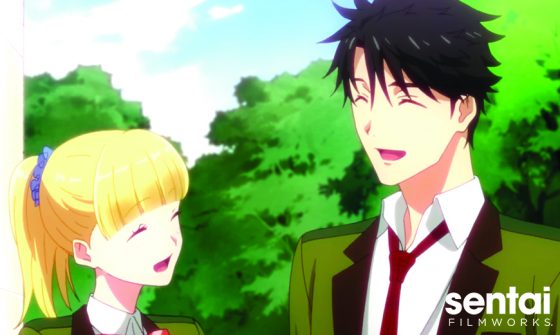
How obvious was Hinako’s secret, really? All the same, it was such a cute story line in Tada-kun wa Koi wo Shinai, but then again, I am a complete sucker for childhood romances, even if the childhood friend is the perverted Hajime (why are you ruining meganekko for me?!). Anyway, I still really enjoyed the storyline since I love seeing that Hinako was hiding her identity and modeling under HINA because she enjoyed it so much. It shows how much she wishes to break through her shell, especially when her modeling photos are not of a shy yet innocent looking girl. She’s bold and brash, which is just one personality that Hinako does not realize that she has.
Then there’s the part of me that wants Hajime to realize that Hinako is HINA. Like your childhood friend is right there; figure it out! I want him to look at Hinako in a different light considering how obvious it is how she feels about Hajime. I am just a darn sucker for childhood romances and this storyline really stirs something up in me. While I’m not excited to see Tada fall in love with Teresa, I have found something that will keep me glued to Tada-kun wo Koi wa Shinai!

Go Hinako x Hajime!! Get together already!!
Rod Locksley
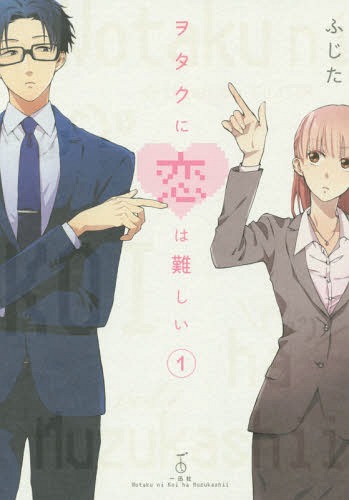
A few recent anime have portrayed an ideal of what an otaku couple should be, but now we have one a little more adult and close to reality; in fact, the third episode of Wotaku ni Koi wa Muzukashii is a perfect example of it. Here we have a typical gaming party, even with Mario Kart and snacks involved, but it suddenly becomes the perfect time for flirting and release the sexual side. From the start, Narumi thought what every woman of her age would: if a man invites you home, it may end up in sex… so be sure you have nice and clean underwear! In the end, it was just a misunderstanding and Tarou and Hanako were invited too, but what if Nifuji’s plan was to lure Narumi using the “friends reunion” as a cover? Trust me, this is very likely.
For romance and slice of life lovers, we have a cute kiss scene and a lot of flirting and jealousy, with a lot of otaku things here and there to justify the theme. And if you like tropes you may find the part where the girls look for Nifuji’s porn stash very funny too. Points for paying respects to the “bro code”, but the best part is Hanako’s little monologue about otaku people, digital porn and japanese spirit! Too bad the convention part is not that good, because this episode (and the series itself) could be better given more time. It even works as a self-contained story!
Inviting other friends, huh? Nifuji, the joke’s on you now...

People talking and kissing after playing Mario Kart? What kind of sorcery is this??
Lizzy Nyanko

In this episode of Tokyo Ghoul:re, the Doves, including our seemingly brainwashed friends Kaneki and Juuzou, are about to infiltrate an underground Ghoul auction after being led there by their original target, The Nutcracker. The Nutcracker, of course, having just kidnapped an undercover Tooru and Juuzou to sell at said auction. We find Tooru being exposed as a one-eyed ghoul and the crowd going wild to have her, including Shuu’s obsessive servant and Madam, with the latter winning Tooru with a 200 million bid.
As Tooru is taken away, out comes a beautiful porcelain gothic lolita doll; our darling Juuzou. Before the MC has even begun the bidding, Juuzou interrupts and jumps in the air, revealing multiple knives hidden within his legs and instantly killing dozens of the audience members in attendance, as well as the masked hosts of the event.
Though initially distracted by seeing Madam, Juuzou is snapped out of it by an attack from none other than the infamous and constantly airborne Rabbit. As kagune daggers rain on Juuzou from above, he delicately jumps, attacks, and maneuvers while still in his beautiful lolita costume, looking like a deadly flower. Until he realizes he’s going to need help and hunkers down to regroup… and take the wig off. Considering how docile Juuzou and Kaneki are for some reason, I was wondering what Juuzou’s fighting personality was going to be like. It was great to see Juuzou fight again, especially in his adorable doll look! But he’s definitely not the same crazy Juuzou from before… and what will happen with Madam now that they’ve seen each other again!?

It’s good to see Juuzou fighting again!!
Finale
6 Light Novels Like The Isolator [Recommendations]
Final Thoughts

Author: Aaron
Previous Articles
Top 5 Anime by Aaron
What Constitutes a Post-Apocalyptic Anime? [Definition, Meaning]

Nagareboshi
Post-Apocalyptic anime actually come in two different formats. One shows or tells you that the world or humanity has been destroyed and we as a race have moved on while others just show you a world, let you get used to it, and then some character goes on to have a monologue about how humanity was destroyed in some form or another. Ironically, humanity almost always ends up in some form of a bizarre dystopia where people do not realize how much they are being lied to or some sort of fear is set in place so that humans do not dare to step outside of the society or town that they live in. Questioning authority will almost always get you killed and if you are lucky, everyone’s memories are erased. If not, then everyone goes around pretending as if nothing has ever happened and that person gets to deal with their trauma silently.
So how did we do it? How did we destroy ourselves? A government so out of touch with the people was elected and thus forms a kakocracy? Or was it a nuclear war that wiped up upwards of 99% of all humanity? Maybe a monster drove us to space? Either way, while the stories vary, it all ends with humanity with a ruined planet, and living somewhere out of desperation where the past is forgotten. An absolute government is necessary and rules the people through deception or fear. Meanwhile, the main character is there to shake things up and return the truth to the spotlight. However, they never realize how close they are to risking everything by doing so.
Ergo Proxy
- Episodes: 23
- Aired: Feb. 2006 - Aug 2006
Romdo is a city. It’s the only one of it’s kind, or so the citizens think. They live out their day to day lives being encouraged to “make waste” because that is what a good citizen does. Assisted by AutoReivs, their companion humanoid robots, the citizens live their lives in bliss. That is, until a strange virus known as the Cogito Virus infects them and makes the robots act as if they are human with a soul. Re-l Mayer, an investigator for the police and daughter of the ruler of Romdo, sets out to crack this mysterious virus and the incidents around them. However, this puts her in the path of Vincent Law, an immigrant, and eventually in the path of a dangerous, violent monster known as the Proxy. As Re-l gets closer to the truth, she will have to turn her back on everything to survive.
Ergo Proxy is a classic, quintessential post-apocalyptic anime. She lives in an incredibly dystopian society where she is told and taught to fear everything outside of the dome. In fact, even outside, she only wants to go back. It is only through exploring the world that she realizes that other domes and societies do and did exist in differing capacities. However, when the proxy gets loose, the people disappeared. Now, the actual story behind everything is that an ecological catastrophe destroyed the surface forcing everyone into the domes, but it’s clear that life can be lived outside of Romdo; it just is a difficult one especially at the beginning of being outside. One other great thing shown is how poorly equipped post-apocalyptic governments are at controlling their own people as well as what happens when you try to enforce absolutes.
Ergo Proxy Trailer:
You bet your sweet bippy there are. A ruined world is a very broad idea and doesn’t necessarily mean that it’s completely inhospitable. You just might have to watch out for the watching eye of a government, or killer plants, or weird beings that walk the earth, but always watch out for the threat of death. The other fun thing about post-apocalyptic worlds is that unlike with Ergo Proxy where Re-l is never in too much danger since the proxies seem to be around her all the time but never kill her, is that the worlds that our characters step out into can be a threat adding a new level of danger and depth to the story. We see this in shows like Shingeki no Kyojin (Attack on Titan) and Koutetsujou no Kabaneri (Kabaneri of the Iron Fortress) where not only is home under attack, but stepping outside of it is even more dangerous. There’s another great post-apocalyptic anime that suits this idea well.
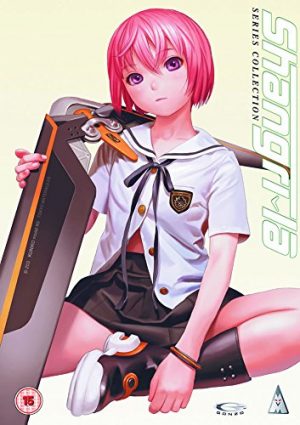
Shangri-La
- Episodes: 24
- Aired: Apr 2009 - Sept 2009
The future that conservatives deny has come true: we are now in a world where savage earthquakes as well as global warming have destroyed the planet and Japan in particular. What has resulted is that nature has reclaimed what we once dominated. Civilization is on its last breath unless we do something. There is the sealed city of Atlas, but getting in is next to impossible as only the wealthy can. There’s a whole group of hackers as well who want to hack into countries around the world and claim wealth for Japan and themselves. And the poor? Well, day to day life for them is an extreme struggle. Classism is real y’all. One girl threatens the balance for that in that she will lead the people into Atlas where they will all live in harmony. This is the story of Kuniko.
If you are a conspiracy theorist or just love a good takedown of the elite, then this anime is for you. While yes, it certainly is set in a financially crippled Japan that has been ruined beyond all measure, there are lots of deadly creatures lurking about in the forms of plants. Forget the government in Atlas being dangerous, the real danger can be getting far enough that the plants get to you! This anime runs two cours and manages to have so many smaller stories going at once that you cannot help but get hooked.
Shangri-La Trailer
Shinsekai Yori (From the New World)
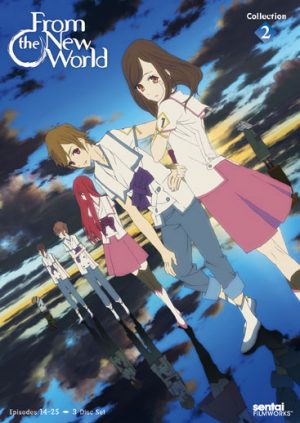
- Episodes: 25
- Aired: Sept. 2012 - Mar. 2013
Set in the town of Kamisu 66, Saki Watanabe, and her classmates Satoru, Mamoru, Maria, and Shun are all students at Sage Academy, a school for psychics. Everyone in this city has psychic powers. It is how many day-to-day things are handled. As their powers awaken too, they get to work more with them. However, when an excursion leads to them heading to a place that they are not supposed to go, they encounter a strangle, translucent, rainbow-colored creature that works for them. Confused, they press it for answers and what they uncover is a past where psychics murdered countless non-psychics before eventually isolating themselves in order to keep peace. When Saki starts to question why Shun, a boy she liked, left things take a turn for the worst and these teenagers, who have the emotional and mental capacity of children, have to learn what the real world is like outside their little paradise.
Shinsekai Yori appears on our thriller anime list as well for an introduction into the thriller genre, but it is also an excellent example of a world ravaged by humanity. When psychics wiped out humans, it also destroyed a large chunk of the population. Though some were spared, we cannot go into too much detail without spoiling you. If there was something to be said for this fantastic anime, it would be that absolutely nothing is as it seems. The world in Shinsekai Yori seems to have taken a massive step backwards in time with not even a hint of technology. People use their powers to travel around on boats and do small things in their everyday lives all the way to using them to fight threats. Stepping outside of their towns, a forbidden action by their totalitarian government, will only enlighten them even further to a harsh reality.
Shinsekai Yori PV
Final Thoughts

Violet Evergarden [Best Review]
Sean Coopa Hoang
“I want to know. I love you.”
- Episodes : 13
- Genre : Drama, Fantasy, Slice of Life
- Airing Date : Jan. 11, 2018 - Apr. 11, 2018
- Producers : Kyoto Animation
Contains Spoilers
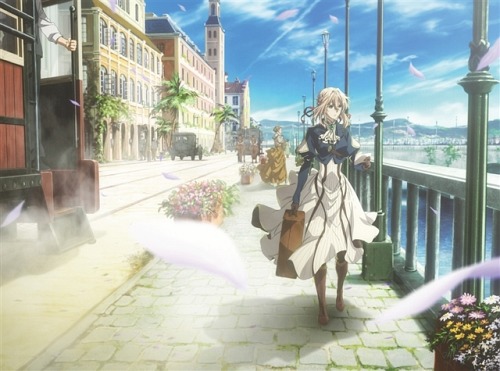
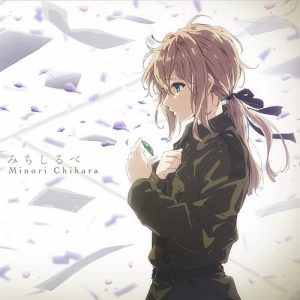
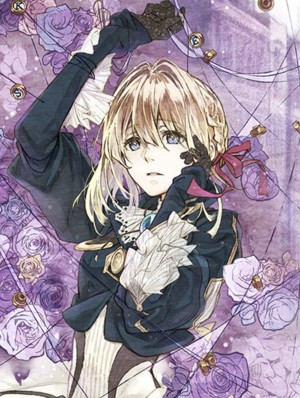
Violet Evergarden is a former child soldier, frozen in place as the world moves ahead. Violet’s metal hands are a constant reminder of her past, a war-torn era being left behind. Fulfilling a promise, former commander Hodgins visits and recruits her for a civilian company: CH Postal Service.
Violet’s attempts to settle into civilian life are uneasy, her military ways making the transition difficult. Then, she sees the work of an “Auto Memory Doll,” an occupation that writes letters for its clients. Caught by inspiration, she joins them, beginning her journey towards finding her new place in the world.
This Victorian-inspired setting is basked in sentiment. It stands between the romanticism of the letter and the tragedy of war. It cradles the emotions of its characters and then releases them restored.
So much of the show has an air of grandiosity. Its goal to elicit empathy is clear. Its visuals and emphasis on emotional swings are transparent and unapologetic. There’s so much feeling placed into the show that it’s overly sentimental--a dangerous line to tread, especially when the job of its protagonist is more than writing.
When a show emphasizes the written word, it’s not unrealistic for a viewer to expect amazing prose and execution. When a show markets itself as an adaptation of the only grand prize winner of the KyoAni award, a contest that has been running for 9 years (2009 - 2018), it’s not wrong to have high expectations. Yet the result was something different.
Words can betray so much. Behind their surface meaning, there exists subtext, the implicit and underlying message. It’s from this you find out intention; it’s from this you enter into a world of subtlety and nuance. A surface reading of any novel will betray you the most. It will give you the bare necessities: the literal but not the figurative.
A certain audience going into this show will feel confused--I include myself amongst them.
To watch Violet Evergarden this way--to focus too much on its dialogue or plot--is to ignore the strength of the medium, the audio-visual elements. Ignore the saying, “beauty is only skin deep.” Visual beauty in this medium is a controlled lens, a skilled process of connecting ideas that speak without words.
To say it simply, “the audio-visual elements of the show are the subtext.”
If you enjoy the show for its visuals, that’s not some mar on your name, and to re-contextualize, the show is my way of acknowledging it--to give it a fair chance.
And just as my expectations were reversed, so too were my feelings. My apprehensions about the show, my awareness of the pressure and critiques of its writing, and my hope for an earnest story--all changed. So let me state it clearly, in a similar fashion as the show.
I truly loved this show.
Against my expectations, this show gave me something I never knew I wanted: a return towards childhood idealism, an innocent and earnest belief that love could conquer all. For a show about writing, it was strangely focused on visuals.This show wanted to emphasize something else: sincerity over subtlety.
With this context, a lot of the directing makes sense. The overt camera shots, in particular, come to mind: Violet encased in a clock as her time ticks forward, the falling of leaves as a character passes away, the Elysian Fields reference, and the punctuating of episodes with the title, resonating the themes of the episode after it has ended.
A lot of these techniques, you’ve most likely seen in one show or another. The story itself isn’t exactly uncommon either. What then pushes this show past a simple cliché?
Timing.
Unlike in a book where timing takes place in our own minds, audio-visual mediums need to consider something fickle and fleeting. Time influences the delivery and execution of dialogue. Too quick a response and you can seem uncaring. Too slow and you might seem inattentive. Time also influences pacing, the careful delivery of which changes one’s understanding.
Yes, time. The very thing that thaws the heart and moves us into tomorrow.
Timing and all its nuance are handled wonderfully. With a rich musical composition by Evan Calls and the masterful sound direction of Yota Tsuruoka, the delivery of lines are conveyed through the rises, falls, and pauses of Violet Evergarden’s music.
Beats, specifically the acting/film term, is used to measure the introduction of new ideas and transitions in the script. The use of these beats is pronounced throughout the show with episode 7 being a superb example. In this episode, there is a scene where Oscar recounts his past. As he struggles to speak, a symphony of things are occurring.
First, his present-day self-acts as a narrator. As the scene reaches its midpoint, the narration stops after he speaks about his daughter’s parasol (beat). Next, the scene transitions with the daughter lifting her parasol, and his daughter speaks as if she were still alive (beat). At this moment, the music transitions into its melody, and the past Oscar speaks.
When the daughter states, “I’m going to walk across the lake. I promise you one day,” there is a pause (beat), an abrupt, stark transition to black, and the emergence of the vocals. Then we see his daughter dying from sickness.
He pushes himself away. He’s too close to the experience on screen, so Oscar’s narration returns and then continues: “Our days were quiet and warm (beat). But… (beat) my only hope… (beat) Why does God continue to take away what’s most precious to me (beat)?”
During this last sequence, there are deliberate pauses in the monologue (indicated by “beat”). The music supplements the scene with these pauses, transitioning to the fleeting plucks of the string instruments with the first beat. The camera transitions with the music, showing his lonely hand on the second beat.
His narration is now in the present day and time can move forward--there exists a response from Violet: “Parting with someone who is important to you (beat)… Never being able to see them again (beat)... I never knew it was so sad (beat)… and painful (beat).”
The structuring of this scene is a deliberate process. There is a method to how directors, composers, and actors help deliver scenes, and it is here that “symphony evokes sympathy.” Encased in each of these beats is so much effort from the audio-visual staff.
Music is timed perfectly to the visuals. The 1st beat transitions to her lonely hand. The second, a reactionary shot of Oscar. The third beat, a tear falls down her face. The fourth beat, a full portrait of her face. The last beat is indicated by a visual shot of the parasol, just as the music comes to an end.
So much of this sequence isn’t natural, but it’s through these sequences that this Violet Evergarden adaptation blossoms. Its grandiosity, its sentimental gestures, its clear need to tug at your emotions, all of this was never meant to be hidden.
Her iconic typewriter exemplifies her journey. From a tool conveying words to a piano for expressing emotions, Violet Evergarden is on a personal journey to becoming human.
Without question, Violet Evergarden is a visual spectacle, one that feels like every episode is a sequence from a film. Mirroring this, the musical composition by Evan Calls and skillful sound directing of Yota Tsuruoka supplement an already luxurious production.
The production for Violet Evergarden is of a grand scale: 5 different languages, 7 episode directors, 10 different storyboard creators, and a multitude of Kyoto Animation talents such as Naoko Yamada and Yoshiji Kigami. To highlight the author Kana Akatsuki, the only grand prize winner of the KyoAni Awards, the animation studio went to every length to push forward this light novel adaptation.
Discussion Time
Violet Evergarden is an interesting adaptation. The insertion of 4 original episodes early on (episodes 2 - 5) are a meaningful change. These episodes remove the mystery behind Violet. Formerly, her past unveiled slowly. Her attachment to weapons tugged at reader curiosity but also separated her. She was an isolated figure, someone hard to grasp and understand--someone hard to empathize with early on.
The adaptation changes this with these original episodes and presents the book chapters in streamlined order. Doing so changes the interpretation of the work. Kyoto Animation wanted to stylize the story with its visuals and give the episodic chapters of the book a unifying theme: the humanizing of characters through empathy.
Violet Evergarden has plenty of reasons to watch it: the visual display, the expert direction of its sound, and the decisions that went into adapting the novel. Looking through the main staff members, you’ll notice a lot of them were involved with famous KEY stories: Kanon, Air, Clannad.
There’s a ton of talent behind Violet Evergarden, and if you’re there for the emotional or technical appeal, then the show is worth your time.
What"s so appealing about this piece of work.
Without question, Violet Evergarden is a visual spectacle, one that feels like every episode is a sequence from a film. Mirroring this, the musical composition by Evan Calls and skillful sound directing of Yota Tsuruoka supplement an already luxurious production.
The production for Violet Evergarden is of a grand scale: 5 different languages, 7 episode directors, 10 different storyboard creators, and a multitude of Kyoto Animation talents such as Naoko Yamada and Yoshiji Kigami. To highlight the author Kana Akatsuki, the only grand prize winner of the KyoAni Awards, the animation studio went to every length to push forward this light novel adaptation.
1. The Visual Splendor and Various Directing Styles
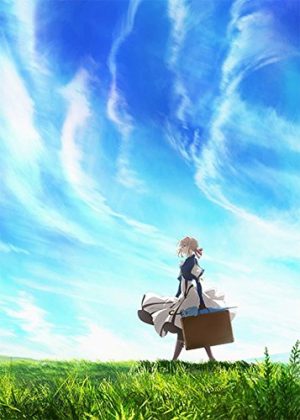
To highlight the episodic nature of the novels, Kyoto Animation brought on a wealth of talent. If identifying different directing styles is your thing, then Violet Evergarden transitions between 7 episode directors. However, if the technical elements are not as inviting, the animation is truly marvelous. It’s instantly recognizable how much time and money went into this show.
2. An Incredible Soundtrack, Superb Sound Directing, and Multiple Languages
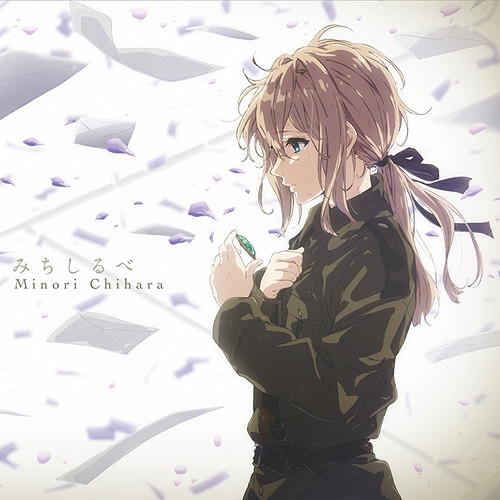
It’s not often that I wholeheartedly shine attention on the audio elements. To not do so here would be a huge disservice. If you’ve ever been curious about how different languages dub anime, then Violet Evergarden has 5: English, Spanish, Japanese, French, and German. The original Japanese has an excellent sense of timing, and the show thrives off of its musical score and the expert timing of its dialogue. If your interest is on the more audio-oriented side of shows, then Violet Evergarden should be at the top of your priority.
3. An Interesting Adaptation of Original Episodes
Original material is certainly a feature of this adaptation. The changes to the story are like ripples in a lake. The four original episodes introduce new characters who help expand the scope of the world. In the same ways Violet speaks for these characters, they return the favor in later episodes.
The decisions to adapt the story in a different order, highlight certain traits of the original story and the inclusion of these new characters emboldens Violet in a different light. While this might not be agreeable to every viewer, the decision making behind these differences are still intriguing.
Those who want a closer adaptation of the light novels might feel mixed about this work. Cutting certain scenes and chapters from the source material is common in adaptations, but the result is a very different Violet Evergarden. The later parts of the adaptation also take a staunchly different tone, choosing to emphasize the war setting prevalent in the novels.
1. A Very Different Violet
I’ll be cautious about explaining this if you plan to read the books. For some, the decisions to cut certain chapters and scenes from the light novels can be disheartening. If your interest in the protagonist was more of her mysterious side, the action-oriented scenes, or the darker tone of certain chapters in the novel, you’ll be left wanting more.
2. A Change in Tone
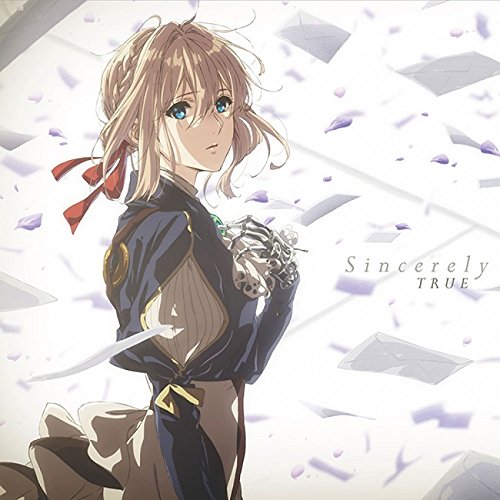
It would be an understatement to say the original novels had an interest in war. Passages to explain the strategies of later battles or the technology through which soldiers use are absent in the anime adaptation. Those more focused on the sentimental, episodic tale of characters--the majority of the show--will find the last few episodes a strange departure.
Final Thoughts
There are plenty of ways to watch Violet Evergarden, and although it won’t appeal to everyone, I think the magnitude of this work and the amount of talent Kyoto Animation brought to Violet Evergarden is more than worth your time. Whatever your interest in Violet Evergarden might be, I hope this review helped highlight the appeal of the show.
Author: Sean "Coopa" Hoang
Previous Articles
Top 5 Anime by Sean "Coopa" Hoang
Subscribe to:
Posts (Atom)
Top 10 Princess Anime List [Best Recommendations]
También puedes leer este artículo en:Español Final Thoughts Author: Eva B. Hello! I’m Eva. I was born and raised in San Francisco, Californ...

-
What You Need to Know: We can now reveal screenshots and the story for episode 21 of Enmusubi no Youko-chan (Fox Spirit Matchmaker)! Get all...
-
Final Thoughts Author: Kain Howdy! I hail from “The Great White North” known as Canada. My hobbies include writing, video games and sports. ...
-
justin-moriarty Thanks to the Metal Gear Solid series since Snake Eater, CQC, or Close Quarters Combat, has given players an exposure to ano...


